
 +86 13600513715


Hot Products
0102030405
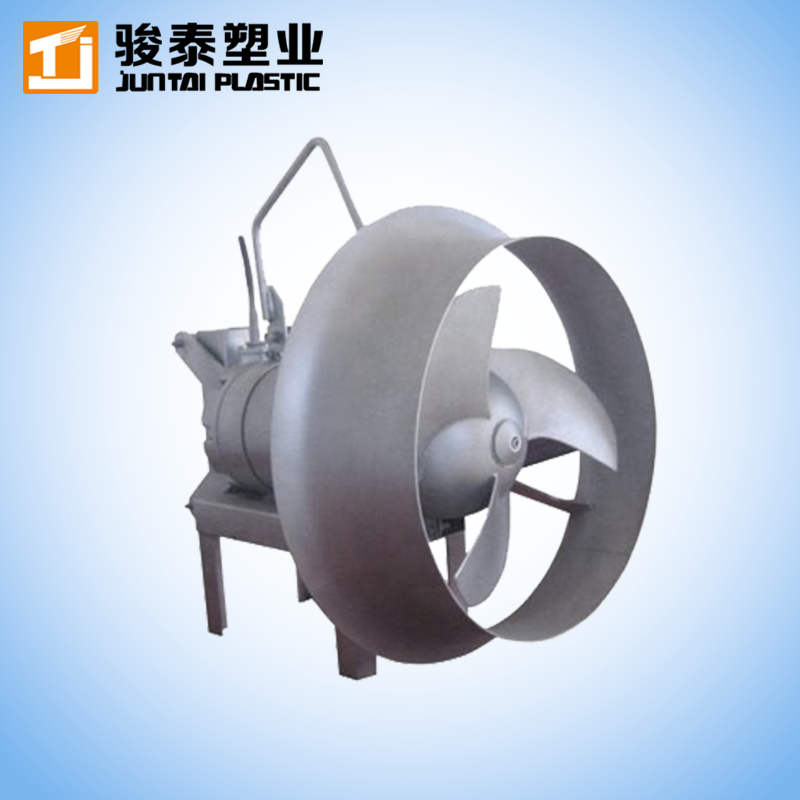
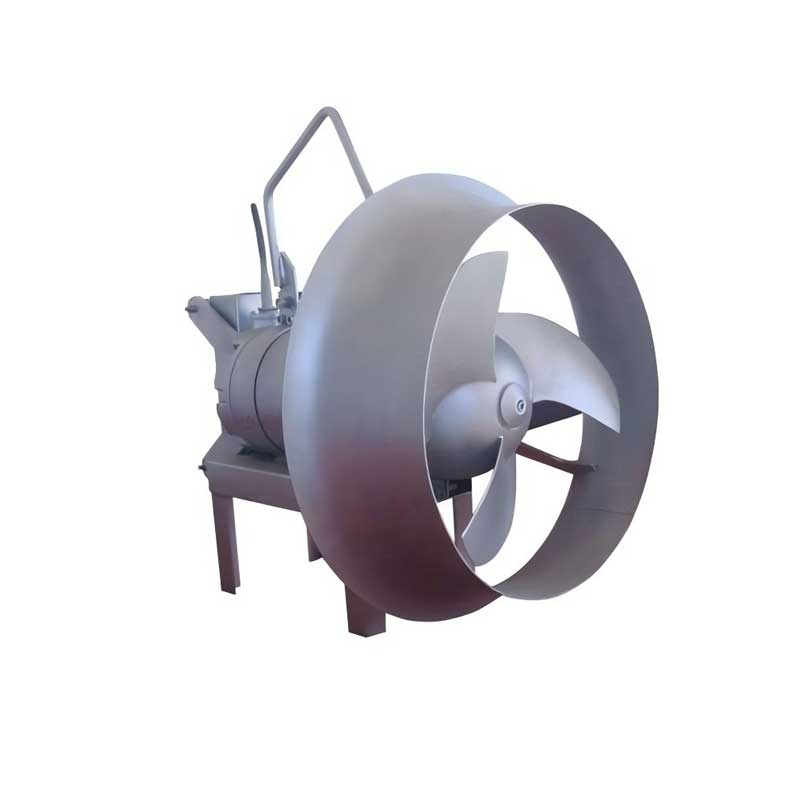
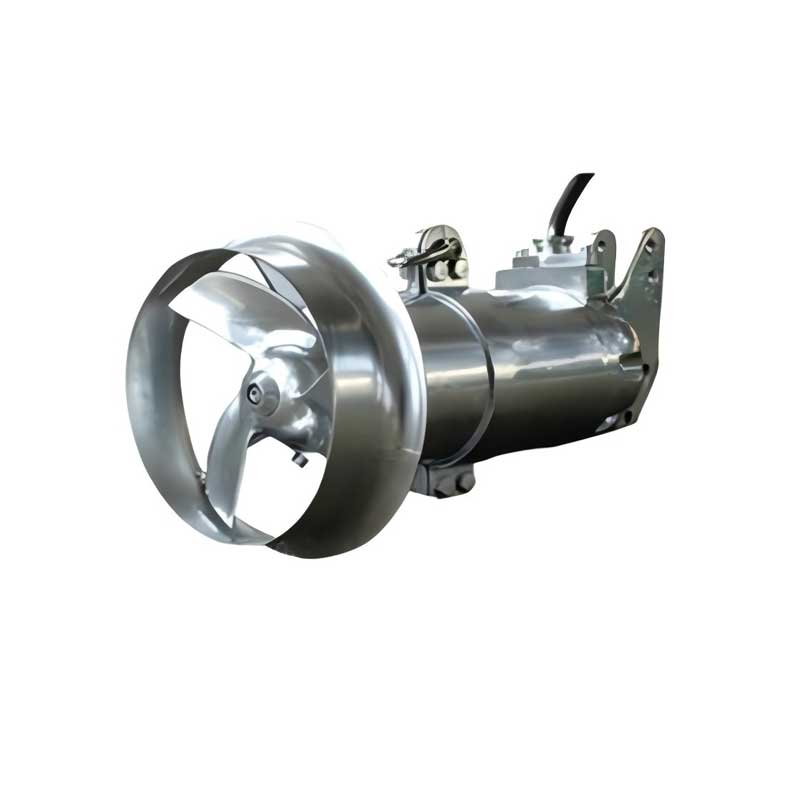
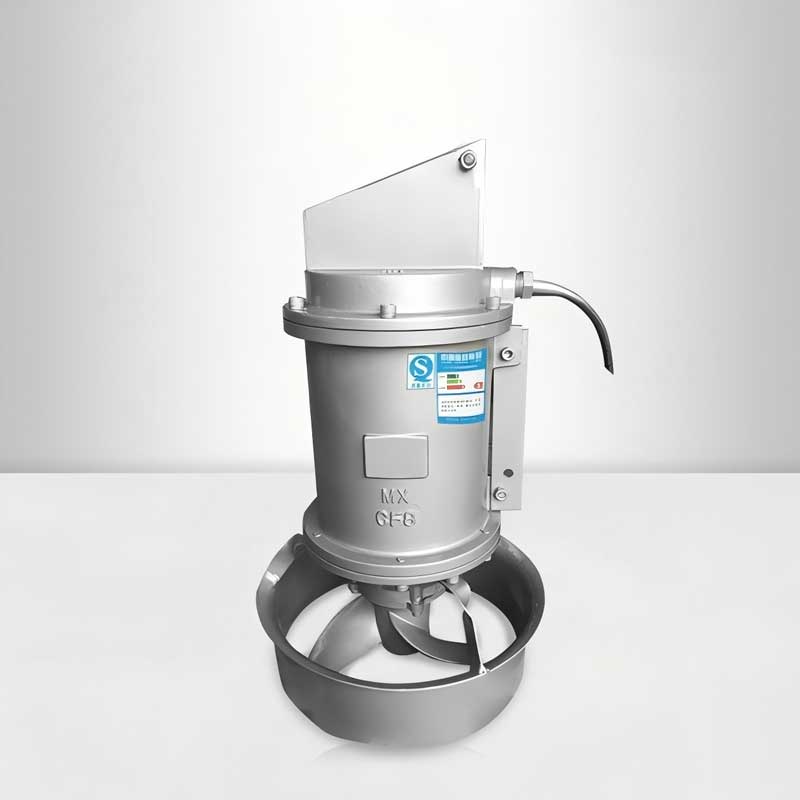
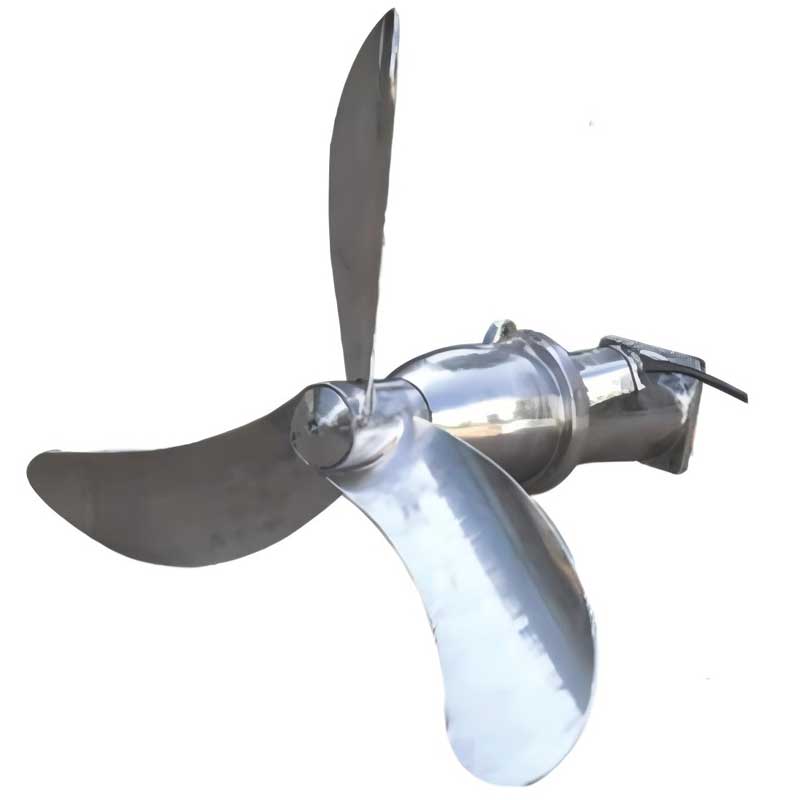
High Quality MBBR Mixing Bio Media Mixer for MBBR Tank - China Suppliers & Factory
Low Speed Mixer Performance Parameters
| Model | Power (KW) | Electrode | Rated current (A) | Speed (r/min) | Quantity (set) | Diameter (mm) | Thrust (N) | Weight (Kg) |
| JUNTAIMIXER3/4 | 3 | 4 | 6.6 | 420 | 2 | 400 | 1400 | 75 |
| JUNTAIMIXER4/4 | 4 | 4 | 8.6 | 420 | 2 | 550 | 1800 | 85 |
| JUNTAIMIXER5.5/4 | 5.5 | 4 | 11.8 | 420 | 2 | 550 | 2100 | 90 |
| JUNTAIMIXER7.5/4 | 7.5 | 4 | 15.5 | 420 | 2 | 620 | 2600 | 100 |
| JUNTAIMIXER11/4 | 11 | 4 | 24 | 420 | 2 | 750 | 3100 | 120 |
| JUNTAIMIXER15/4 | 15 | 4 | 33 | 420 | 2 | 800 | 3500 | 150 |
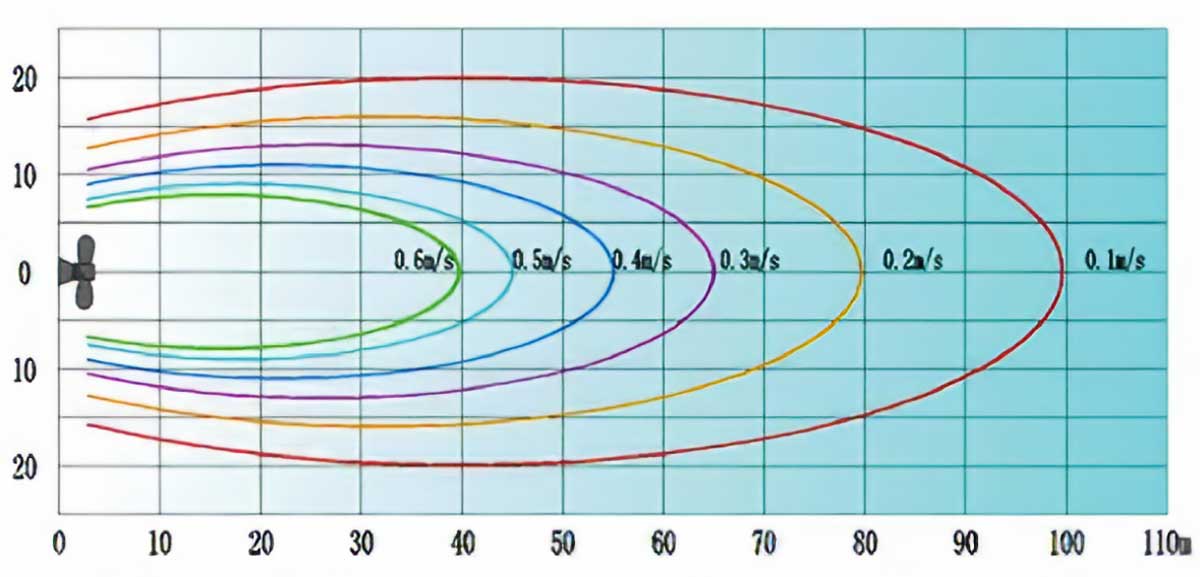
Mixing range speed of 0.1m/s (clear water)
Submersible Mixer Performance Parameters
| Model | Motor power (kw) | Electrode | Rated current (A) | RPM of vane or propeller (r/min) | Diameter of vane or propeller (mm) | Weight (kg) |
| QJB0.37/6 | 0.37 | 6 | 4 | 980 | 220 | 25 |
| QJB0.85/8 | 0.85 | 8 | 3.2 | 740 | 260 | 55 |
| QJB1.5/6 | 1.5 | 6 | 4 | 980 | 260 | 55 |
| QJB2.2/8 | 2.2 | 8 | 5.9 | 740 | 320 | 88 |
| QJB 4/6 | 4 | 6 | 10.3 | 960 | 320 | 88 |
| QJB1.5/8 | 1.5 | 8 | 5.2 | 740 | 400 | 74 |
| QJB2.5/8 | 2.5 | 8 | 7 | 740 | 400 | 74 |
| QJB 3/8 | 3 | 8 | 8.6 | 740 | 400 | 74 |
| QJB 4/6 | 4 | 6 | 10.3 | 980 | 400 | 74 |
Frequently Asked Questions (FAQ)
What is the main difference between low-speed mixers and QJB series submersible mixers?
Low-speed mixers typically utilize larger propeller diameters (400 mm to 800 mm) running at moderate speeds (e.g., 420 r/min) to generate high flow rates and continuous thrust. Standard QJB mixers operate at higher rotation speeds (up to 980 r/min) with smaller blades, making them ideal for high-shear agitation and quick homogenizing in smaller tanks.
What is the significance of the 0.1 m/s flow velocity standard in clear water?
A sustained minimum velocity of 0.1 m/s (0.1m/s) in water is the widely accepted engineering threshold to prevent suspended solids, biomass, and activated sludge from settling out at the bottom of wastewater tanks.
How do I select the right motor power and propeller diameter for my tank?
Selection depends on the tank dimensions, liquid volume, fluid viscosity, and solids concentration. Larger deep-water pools typically require higher thrust mixers with wide diameters (such as JUNTAIMIXER 11/4 or 15/4), whereas localized agitations in compact basins can be handled by smaller units like QJB 0.37/6 or QJB 1.5/8.
What does the "Electrode" parameter indicate in the technical specifications?
"Electrode" refers to the number of motor poles (e.g., 4-pole, 6-pole, or 8-pole). The pole count dictates the motor's synchronous speed: higher pole counts produce lower rotational speeds and higher torque, which is essential for turning larger diameter mixer blades smoothly.
What operational conditions can these submersible mixers handle?
These mixers are engineered for liquid immersion environments such as municipal aeration tanks, anaerobic digesters, sludge holding tanks, and industrial effluent basins, keeping solids evenly suspended without dead zones.
How does thrust output correlate with energy efficiency in mixing systems?
Mixer efficiency is evaluated by the thrust produced per kilowatt (N/kW). Models configured with optimized blade diameters operating at low speeds produce directional thrust more efficiently, minimizing electrical consumption while circulating bulk liquid volumes.