
 +86 13600513715


Hot Products


0102030405


China MBBR Wastewater Treatment Process for Aquaculture - Leading Suppliers and Factory Solutions
Quality Materials for Safe and Durable MBBR Media
The material used in MBBR biofilter media plays a crucial role in determining its performance, longevity, and ease of biofilm formation. A high-quality and pure material not only ensures a longer service life but also facilitates the rapid development of a stable biofilm, which is essential for the efficient operation of the system.
Food-Grade Safety
JUNTAI prioritizes the use of food-grade materials in the production of its MBBR media. This ensures that the material is free from harmful substances, such as heavy metals like lead and tin, as well as phthalates and plasticizers, which are known to pose significant health risks. Phthalates and plasticizers, in particular, have been linked to cancer and other serious illnesses in both humans and animals. This is especially critical in applications like fish farms, where the health of the aquatic life is paramount. Non-food-grade materials can contaminate the water, leading to health problems for the fish and potentially compromising the entire farming operation.
100% Virgin HDPE
Moreover, the MBBR media produced by JUNTAI is made from 100% virgin HDPE (high-density polyethylene). This ensures that the media is durable and resistant to wear. In contrast, materials that incorporate recycled components, such as fillers like calcium carbonate or reused HDPE, are prone to brittleness. These inferior materials can easily break into small plastic fragments, which pose significant risks in both drinking water treatment and aquaculture settings. These tiny plastic particles are difficult to remove from water, and in some cases, there is no effective method for their removal. When fish or other aquatic organisms come into contact with water containing plastic debris, it can severely impact their health, growth, and overall well-being. The presence of such contaminants also poses potential health hazards to humans who consume the water or aquatic products.
In addition to the above, JUNTAI's MBBR media is designed with UV protection, extending its lifespan to an impressive 20 years. In aquatic systems, such as aerobic and anaerobic tanks, the media is often exposed to direct sunlight for extended periods. Without proper UV protection, the material can degrade under the harsh sunlight, leading to breakage and the release of harmful plastic debris into the water. This, in turn, creates a vicious cycle of contamination, exacerbating the risks mentioned earlier.
In summary, the choice of material for MBBR biofilter media is a critical factor that affects both the efficiency and safety of water treatment systems. JUNTAI’s commitment to using food-grade, virgin HDPE with UV protection ensures that its MBBR media is not only high-performance but also safe for both aquatic life and human health, guaranteeing long-lasting reliability in various applications.
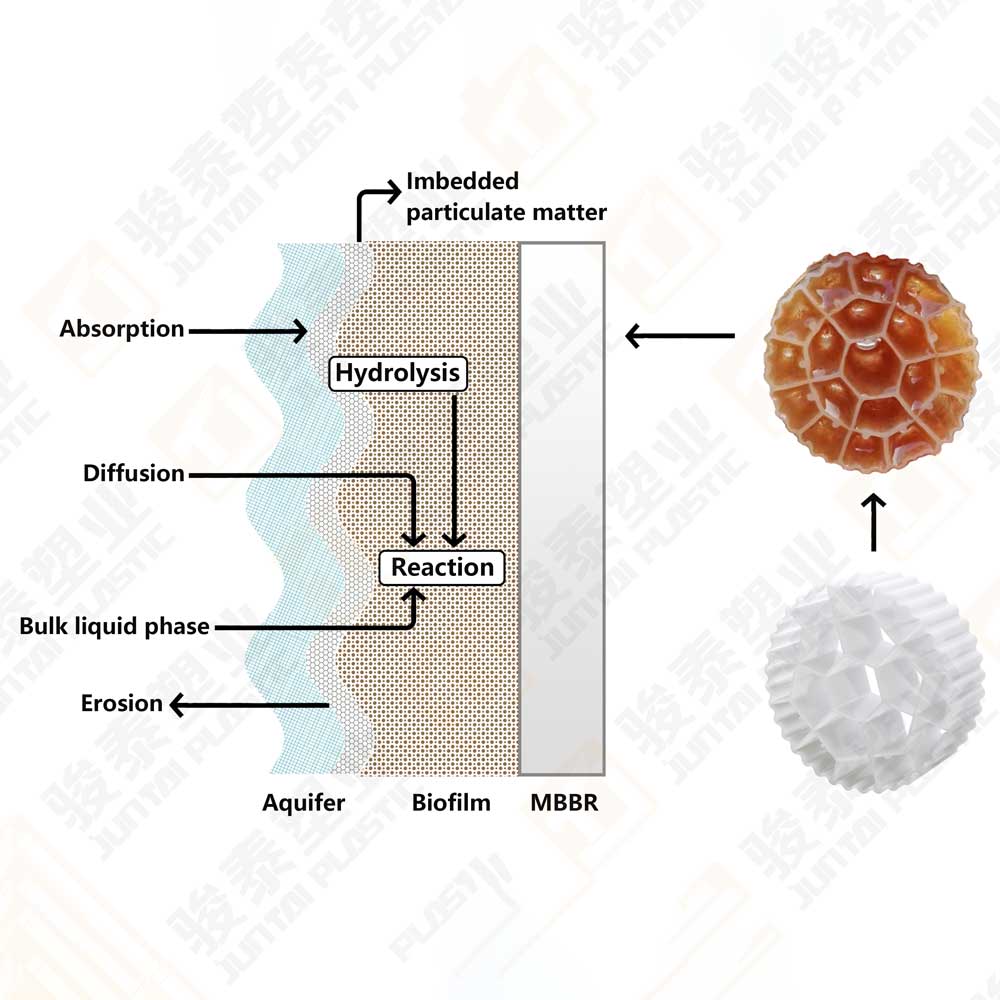
MBBR Filter Media Working Principle
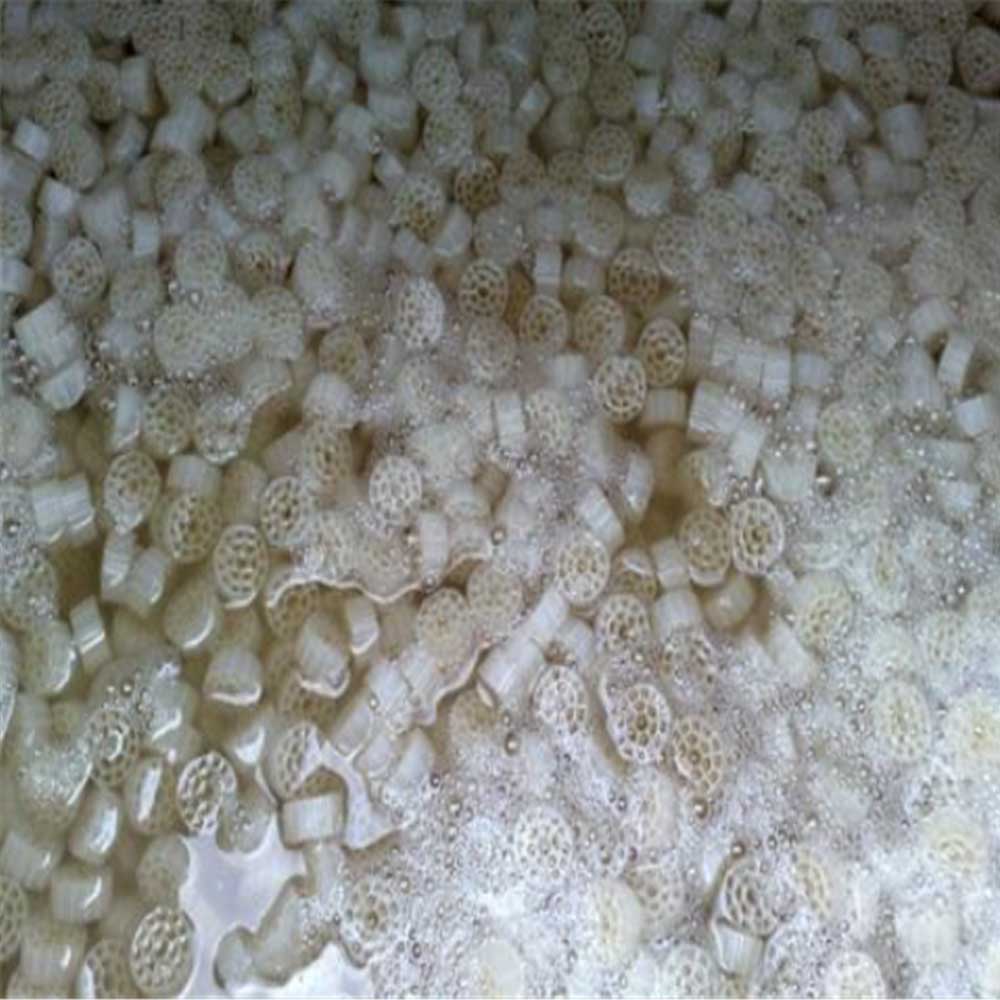
MBBR carrier deployment site
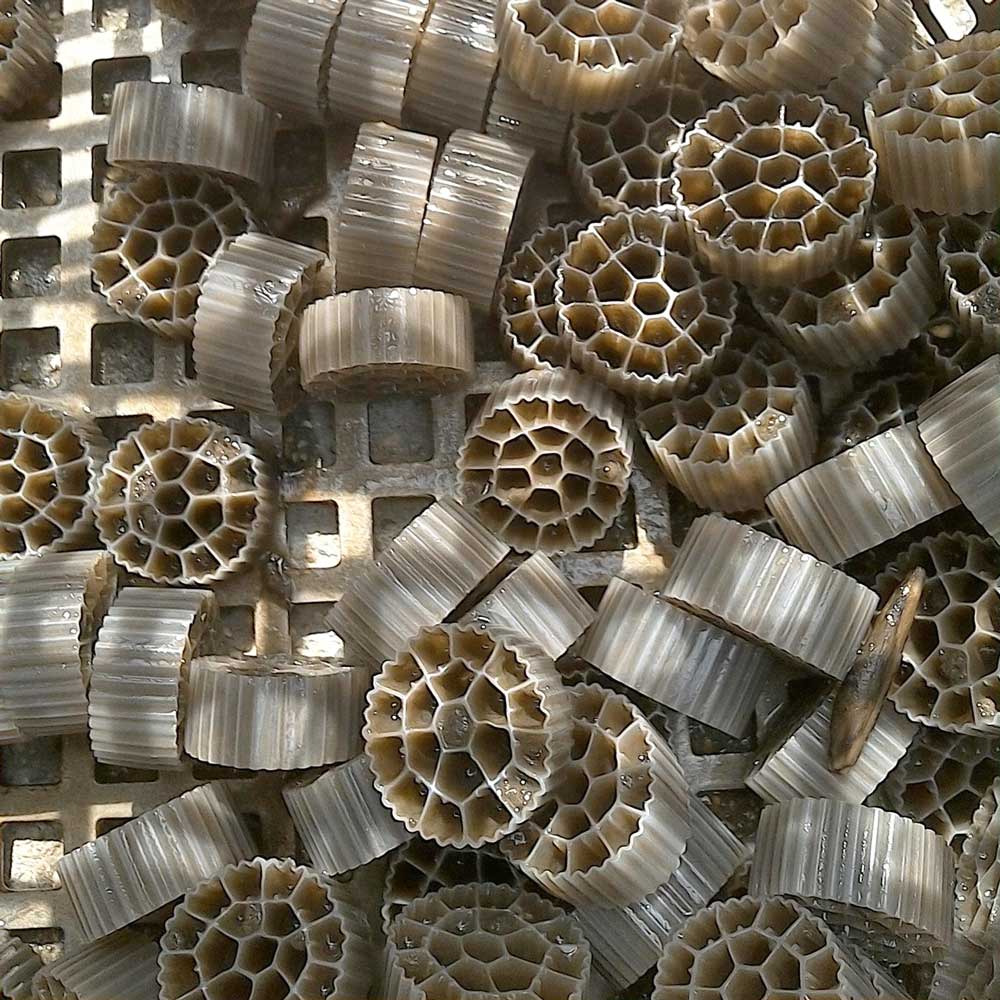
Biofilm formation on MBBR carriers

MBBR Application Scene
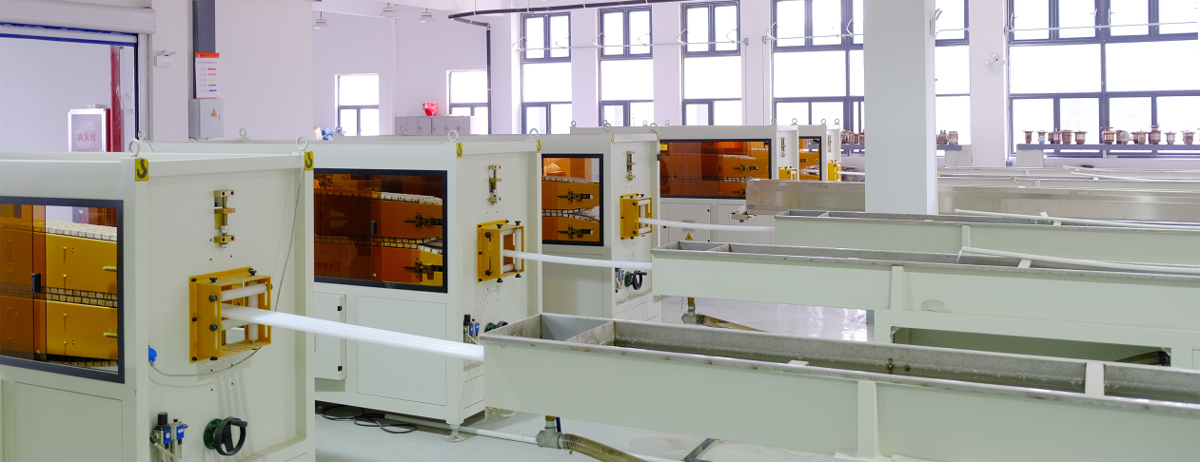
Our Core Advantages
Frequently Asked Questions (FAQ)
Q1: Why does the material of MBBR media matter so much?
The material determines the overall performance, durability, and how quickly a stable biofilm can form. High-quality materials ensure a longer service life and efficient wastewater treatment.
Q2: What is the advantage of JUNTAI using food-grade materials?
Food-grade materials are free from heavy metals (like lead and tin), phthalates, and plasticizers. This guarantees no toxic chemicals leach into the water, protecting fish, aquatic life, and human consumers from severe health risks like cancer.
Q3: Why is 100% virgin HDPE better than recycled plastic for MBBR?
100% virgin HDPE is highly durable and wear-resistant. Recycled plastics or those with calcium carbonate fillers are brittle and easily break down into tiny microplastics, which contaminate water and harm aquatic ecosystems.
Q4: How does UV protection benefit MBBR media?
Since MBBR media is often exposed to direct sunlight in aerobic and anaerobic tanks, UV protection prevents the material from degrading, becoming brittle, and breaking down under harsh sunlight.
Q5: What is the lifespan of JUNTAI's MBBR media?
Thanks to the formulation of 100% virgin HDPE combined with advanced UV protection, JUNTAI's MBBR media features an impressive operational lifespan of up to 20 years.